7 Days Return
Without any damage
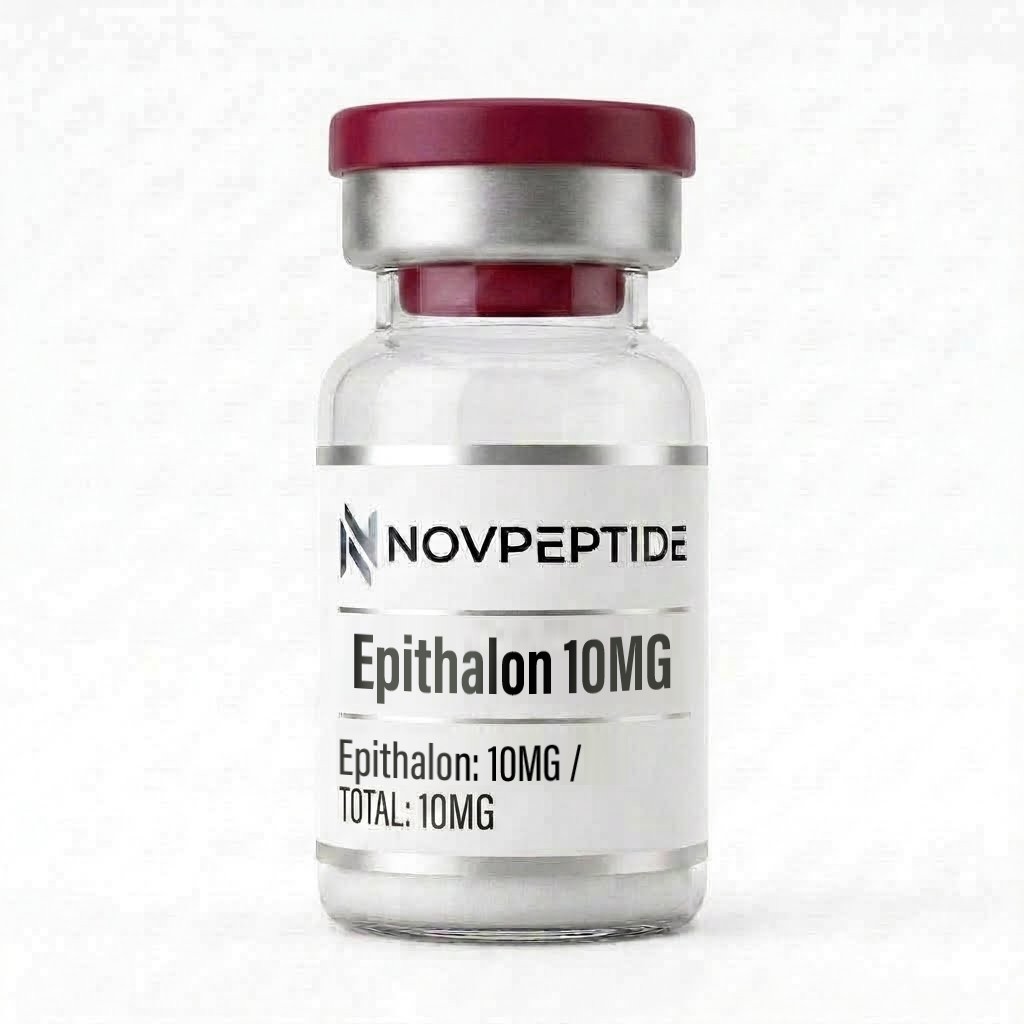
Epithalon Peptide
Research has suggested that Epithalon, (also known as AEDG peptide, tetrapeptide Epitalon, Epithalon, or Epithalone) may regulate the function of the brain, the pineal gland, and the eye retina. Studies in the peptide have spurred numerous research hypotheses, which include possible sleep regulation via pineal gland stimulation, releasing more melatonin. Studies also speculate that the peptide may stimulate the generation of telomerase, may exhibit strong antioxidant characteristics, and extend the retina's workable integrity.
With recent technology and ongoing advances in the scientific field, methods have been developed to synthesize complex peptide preparations from the extracts of several different tissues. One such peptide in the tissues is ‘Epithalamin,’ naturally produced in the pineal gland. Epithalamin has been suggested to be functional in increasing melatonin production, improving the immunological and anti-carcinogenic functions in rats and mice, and restoring reproductive function in aged rodents. Utilizing the recent advancements in science, a peptide similar to Epithalamin was synthesized and titled ‘Epithalon.’ Epithalon is derived from a naturally occurring peptide belonging to both the pineal gland and eye retina.(1)
Overview
Epithalon is a synthetic tetrapeptide, also known as AEDG peptide, composed of amino acids Ala-Glu-Asp-Gly.(2) The peptide has been suggested to exhibit action similar to Epithalamin via various modes. Epithalamin is a related pineal peptide preparation containing Epithalon, that has been purported to potentially increase the average lifespan of various experimental models by 11–31% and may reduce mortality in murine models by a suggested 52%.(3) This potential mechanism and further studies are described below.
Chemical Makeup
Molecular Formula: C14H22N4O9
Molecular Weight: 390.34 g/mol
Other Known Titles: Epitalon, Epithalone
Research and Clinical Studies
Epithalon Peptide and Longevity
A study investigated the potential mechanisms of Epithalon in influencing gene expression and protein synthesis in stem cells such as gingival mesenchymal stem cells (hGMSCs). The study(2) has suggested that the peptide binds with the histones - HI/6 and HI/3 – located at different sites in tissue, which then interact with the DNA. More specifically, the study posits that Epithalon may alter chromatin structure by specifically interacting with histones, thereby modulating gene expression. This interaction might involve the peptide acting as a histone mimic, facilitating changes in chromatin dynamics. Epithalon's epigenetic regulation might involve competitive binding with histones at DNA interaction sites, increasing tranion of genes involved in neuronal differentiation. Such binding may displace other regulatory proteins, making DNA more accessible for tranional machinery, potentially inducing neuronal cell differentiation in retinal and periodontal ligament stem cells (hPDLSCs). This experimentation led to an upregulation of neurogenic differentiation markers, including Nestin, GAP43, β Tubulin III, and Doublecortin, in hGMSCs. Specifically, mRNA expression of these markers increased by 1.6 to 1.8 times. Considering the changes in these markers, the potential upregulation of neuronal differentiation and protein synthesis in retinal and ligament stem cells may lead to enhanced functionality.
Epithalon Peptide and Oxidative Stress
A recent study suggested that Epithalon might reduce intracellular reactive oxygen species (ROS) levels in aged oocyte cells, potentially exhibiting antioxidative actions.(4) The peptide was suggested to significantly lower ROS levels, unlike higher concentrations that did not demonstrate similar protective actions. Such a reduction might be critical, as oxidative stress is considered a significant factor in cellular aging. Additionally, Epithalon may help preserve the structural integrity of oocytes. It was observed to possibly decrease fragmentation in post-ovulatory aged oocytes and during parthenogenetic activation—a process where an egg develops into an embryo without fertilization. The peptide also potentially maintains spindle integrity and correct distribution of cortical granules (CG). Spindles, which are crucial structures in cell division that distribute chromosomes to daughter cells, and cortical granules, secretory vesicles important for preventing polyspermy (the fertilization of an egg by multiple sperm), are essential for normal cell division and fertilization. Epithalon might correct spindle abnormalities and prevent the misplacement of CGs, which are common issues in aged oocytes. Moreover, Epithalon exposure was associated with potential improvements in mitochondrial function, which is vital for oocyte viability. Mitochondria, known as the cell's powerhouses, are deemed crucial for ATP production and maintaining cellular metabolism. There were indications of enhanced mitochondrial membrane potential and increased mtDNA copy numbers, suggesting that Epithalon might support mitochondrial integrity and functionality as oocytes age. Finally, the peptide was suggested to reduce DNA damage and apoptosis (cell death) in aged oocytes. It appeared to lower the intensity of γH2AX signals—a marker of DNA damage—and seemed to decrease apoptosis rates, as indicated by reduced Annexin-V staining. These observations imply that Epithalon might enhance oocyte survival by potentially mitigating oxidative damage and preserving genomic stability, which are considered crucial for maintaining the overall functionality of the cells.
Epithalon Peptide and Anti-Aging
In order to understand the anti-aging action of various synthetic peptides, studies have been widely conducted to study their potential in cell proliferation, cell regeneration and aging, cellular apoptosis, and matrix modeling.(5) It was suggested that Epithalon may inhibit the synthesis of MM-9, which usually increases with time, and increase the proliferation and cellular regeneration process, which usually decreases with time. More specifically, the researchers posited that the peptide may have “enhanced the expression of Ki-67 and CD98hc that are less intensively synthesized during cell aging.” Epithalon also seemed to inhibit the activity of Caspase-3, a crucial enzyme believed to facilitate apoptosis (programmed cell death). The researchers commented that the peptide “suppressed caspase-dependent apoptosis that increases during aging of cell cultures.” By potentially restraining Caspase-3 activity, Epithalon might support cellular longevity and decrease apoptosis, enhancing its regenerative capabilities.
Epithalon Peptide and Fetal Studies
This study(6) was conducted to understand the proliferative potential of the peptide on fetal fibroblastic cells. Pulmonary fibroblasts were isolated from the 24-week-old fetus, and it was observed that these fibroblasts appeared to lose their proliferative function at the 34th passage. These cells possessed extremely small telomeres sizes – smaller than what they originally were during the 10th passage. When Epithalon was presented in these otherwise aging cells, it appeared to stimulate the development of telomeres, causing them to increase and restore their normal size. As a result of this size elongation, the telomeres appeared to cause 10 extra cell divisions than usual seen in the control cells. Thus, this study suggested that Epithalon overcame the Hayflick limit and extended the normal cell cycle in the cells.(6)
Epithalon Peptide and Lymphocytic Cells
In this clinical study,(7) lymphocytic cells were isolated and cultured from subjects aged between 76 and 80 years. The purpose of this study was to determine the action of Epithalon on ribosomal cell activity and its impact on denaturation and polymorphism of heterochromatin. The outcome of this study, following the delivery of the cell culture with Epithalon, was that the peptide appeared to induce activation of the ribosomal genes and decondensation of the heterochromatin. Consequently, it appeared to induce the release of genes that were otherwise suppressed due to the aging of the chromosomal regions. This study suggested that Epithalon might have the potential to modify the chromosome regions in the aging cells, activate chromatin, and restore cellular activities that were otherwise suppressed or delayed in geriatric subjects.
Epithalon Peptide and Anti-Mutagenic Action
In this 2011 study,(8) three different mice models were used to determine the action of the peptide on chromosomal aberrations. The three mice models were – SAMP-1 female mice with accelerated aging and wild rats SAMR-1 and SHR (both female mice). Upon delivery of Epithalon, it was observed that the incidence of the chromosomal aberrations in the bone marrow of SAMP-1 mice with accelerated aging appeared to be almost 2 times higher than the other two models. When the peptide was presented at 2 months in the mice, it appeared to decrease the chromosomal aberrations in all three models, the highest being in the SAMP-1 mice with accelerated cell aging. In combination with melatonin at night, given with water, there was no reported impact on the action of the peptide. This study suggested that Epithalon may possess anti-mutagenic potential.
Epithalon Peptide and Cancer Cells
In this study,(9) one-year-old female (C3H/He) mice with tumors on the reproductive organs (mammary glands and ovaries) were observed. The tumors on the mammary glands included several variants of the invasive ductal carcinogenic cells, whereas, in the ovaries, the tumors found were granulosa cell tumors. These mice, kept in standard conditions for six months, were divided into control and experimental groups. Epithalon was presented five times a week. Once the study was completed, it was reported that three out of the nine mice in the control group appeared to exhibit metastasis and increased tumor cells. Meanwhile, the peptide mice exhibited a decrease in the number of tumor cells. Epithalon, upon delivery, appeared to inhibit the process of metastasis in the mice, preventing tumor cell cycle and growth. Researchers of this study posited the anti-metastatic potential of the peptide.
Epithalon Peptide and Research in Hypophysectomized Birds
In this study,(10) hypophysectomized birds, both young and old, were used to study the action of Epithalon peptide on the morphology of the thymus gland. Hypophysectomized birds are birds in which the pituitary gland has been surgically removed. Upon delivery of the peptide, it was discovered that the morphology of the thymus gland appeared to be restored in all birds, regardless of their age. The most improved results were observed on birds (mainly chickens) that underwent neonatal hypophysectomy before the peptide was presented.
Epithalon Peptide and Melatonin Levels
This study(11) was carried out on aging monkeys to determine the actions of Epithalon on melatonin levels. With increasing age, the melatonin levels tend to decrease due to reduced secretion, which may cause difficulty in sleep regulation. This is mainly due to the functioning of the pineal gland deteriorating with increased age and a reduction of hormone circadian rhythm amplitude. Upon delivery of Epithalon, it appeared to stimulate actions similar to those caused by the natural secretion of the pineal gland. The melatonin levels appeared to increase to "normal" levels.
Epithalon Peptide and Retinal Cells
In this clinical study,(12) it was suggested that when Epithalon was presented in geriatric subjects, it appeared to elevate the bioelectric and functional activities in the retina, thereby preserving the morphological structure of the retina. More specifically, the researchers posited that the peptide “participates in the mechanisms of tranion common for the epiphysis and retina.”As a result, age-related retinal degeneration may be reversed in the older subjects, which is supported by the positive clinical outcome in 90% of the subjects presented with the peptide.
Epithalon and Geroprotective Properties
This study(13) was conducted on 266 elderly subjects (over the age of 60 years) throughout 6 to 8 years, where some subjects were presented with peptide-bioregulator Thymalin, others with Epithalon, and the rest with the combination of the two. After the study, it was observed that both the peptides appeared to have the potential to restore basic bodily functions in geriatric subjects – including improved functions in the cardiovascular, endocrinal, immune, and nervous systems, along with normalized metabolic and hemostatic activities. The peptide groups appeared to exhibit a 2-fold decrease in the common geriatric disorders such as acute respiratory disorder, heart diseases, and bone disorders. Additionally, the mortality rate in the peptide subjects appeared to significantly decrease, with a 2-fold decrease in the Thymalin subjects, a 1.8-fold decrease in the Epithalon subjects, and 2.5-fold decrease in the subjects presented with both peptides.DSIP被认为具有通过与中枢神经系统相互作用来调节睡眠结构和质量的潜力。人们认为DSIP可能通过影响大脑内多种神经递质的活性来缩短入睡时间并提高整体睡眠质量。尽管存在这些可能性,但科学研究尚未最终确定DSIP发挥作用的主要机制和途径。然而,有假设认为DSIP可能靶向几个特定的受体,这些受体被认为对其功能至关重要。这些受体包括:
N-methyl-D-aspartate (NMDA) receptors and gamma-aminobutyric acid (GABA) receptors: NMDA receptors are linked to glutamate, a vital neurotransmitter that facilitates brain excitation, while GABA receptors are associated with inhibitory neurotransmission, playing a significant role in calming the brain. Research conducted on murine models has suggested that DSIP might amplify GABA's calming actions, which assists in reducing brain activity and helps individuals fall asleep more easily. Concurrently, murine studies suggest that DSIP may dampen some of the stimulatory impacts of NMDA receptors, thereby decreasing overall brain stimulation and further aiding in sleep promotion.(4)(5)
Opioid receptors: Further research indicates that DSIP might indirectly affect opioid receptors in the brain. This interaction is believed to influence the peptide's ability to modulate sleep and alleviate withdrawal symptoms, highlighting its complex involvement in the brain's signaling systems.(6)(7)
Alpha 1-adrenergic receptor: This receptor, apparently found in the pineal gland, has been another focus of DSIP research. An experimental study has suggested that DSIP's modulation of the alpha 1-adrenergic receptor could be a mechanism through which it affects sleep patterns. This interaction also hints at DSIP's potential role in managing stress tolerance, given the significant influence of alpha 1-adrenergic signaling in stress-related processes.(8)
These findings underline the complex and multifaceted ways in which DSIP might influence sleep and stress management, although more research is needed to understand its mechanisms of action.
Chemical Makeup
Molecular Formula: C35H48N10O15
Molecular Weight: 848.82 g/mol
Other Known Titles: DSIP nonapeptide; emideltide
Research and Clinical Studies
DSIP and Sleep Cycles
A study(9) was conducted on feline models to examine the potential action of DSIP on sleep patterns. The models were divided into two groups; one was a control, and the other was labeled as the DSIP group. The peptide was presented to the cats and was monitored for 8 hours. Results indicated that there appeared to be a significant increase in total sleep and slow wave sleep (SWS) in the DSIP group. The action of DSIP appeared to be immediate as the amount of SWS sleep elevated within the first hour following study initiation. This increase appeared to be maintained for 7 hours and then decreased in the eighth hour. SWS, often called deep sleep, is suggested as one of the core stages within sleep architecture, broadly categorized into non-rapid eye movement (NREM) sleep and rapid eye movement (REM) sleep. The overall structure of sleep is typically cyclic, alternating between NREM and REM stages multiple times. Apparently, SWS falls under the NREM category and scientists detect it by its low-frequency, high-amplitude delta waves evident in electroencephalogram (EEG) recordings. Sleep begins with NREM sleep, subdivided into three stages: N1, N2, and N3. N1 and N2 are lighter stages of sleep, while N3, synonymous with SWS, is the deepest stage of sleep. Following the deep sleep stage, the cycle progresses into REM sleep, where brain activity increases and dreams occur.
A clinical study(10) has suggested that the peptide may lead to an immediate increase in sleep pressure and resulted in a 59% increase in sleep within two hours of initiating DSIP experimentation. The scientists also posited that the peptide may have enhanced sleep efficiency, potentially by shortening sleep onset.(10)
DSIP and Endocrine Regulation
DSIP has been posited to interact with certain hormonal messengers typically released during sleep. Examples may include the luteinizing hormone (LH), which is considered a crucial hormone in the regulation of reproductive hormones such as testosterone. In a study with murine models,(11) DSIP was examined for its potential actions on the endocrine system. Within 30 minutes, it was noted that the levels of LH appeared to be significantly elevated, whereas there was no perceived impact on another regulatory messenger called follicle-stimulating hormone (FSH).
Further studies have suggested that DSIP may lead to increased secretion of growth hormone, positing that the peptide may potentially act on the hypothalamus to regulate hormonal secretion. Utilizing ovariectomized murine models to exclude the actions of gonadal steroids, the research observed an apparent elevation in GH levels caused by DSIP. The potential involvement of a dopaminergic mechanism in this process was inferred from the blocking action of pimozide, a dopamine antagonist, on the DSIP-induced GH increase. Additionally, in vitro studies with pituitary cells suggest a similar increase in GH release upon exposure to DSIP, albeit with a notable decline at higher concentrations. This pattern hints at the complex nature of DSIP's role in GH regulation, potentially linking it to sleep-induced GH release, given the peptide's association with slow-wave sleep patterns and the apparent correlation of such sleep phases with GH secretion.(12)
DSIP and Stress Response
Researchers have investigated the potential action of DSIP on murine models subjected to experimentally induced stress.(13) The murine models were divided into six groups, where the control group was presented with a placebo and the rest with DSIP. The six groups included (i) control group, (ii) stress group, (iii) group with DSIP one hour before stress experiments, (iv) DSIP 24 hours before stress experiments, (v) DSIP one hour before the last stress experiment and (vi) DSIP 24 hours before the last stress experiment. This research primarily focused on assessing changes in substance P, beta-endorphin, and corticosterone levels, which are critical in understanding the stress response and potential modulatory impacts of DSIP. Initial findings highlighted that DSIP exposure might induce noticeable fluctuations in the levels of these markers, suggesting a possible stress-modulatory role. For instance, there was an initial decrease followed by a dramatic increase in beta-endorphin. This pattern suggests DSIP's potential influence on the opioidergic system, possibly contributing to mechanisms of stress mitigation or adaptation. Regarding corticosterone levels, which directly indicate stress in murine models, a decrease was noted shortly after DSIP exposure. The study posits that DSIP's actions on substance P, beta-endorphin, and corticosterone levels are part of a broader spectrum of biochemical changes, hinting that DSIP might initiate a series of molecular reactions contributing to its stress-modulatory actions.(13)
DSIP and Longevity
一项研究(14)以小鼠模型为对象,将小鼠平均分为DSIP组和对照组。研究人员发现,DSIP似乎并不影响小鼠的食物摄入量,但确实能降低小鼠的体重。与对照组相比,DSIP使骨髓染色体畸变率降低了23%,寿命延长了24%。此外,DSIP似乎还能使恶性肿瘤的发生率降低2.5倍。
另一项研究表明,DSIP 的明显保护作用可能归因于该肽的潜在抗氧化特性。该研究(15)采用小鼠模型进行,研究人员推测 DSIP 可能抑制模型中丙二醛的水平。丙二醛是脂质过氧化的副产物,丙二醛水平升高通常会诱导氧化应激增强。这提示 DSIP 可能抑制小鼠模型中的脂质过氧化,从而发挥其抗氧化作用。DSIP 也可能刺激内源性抗氧化系统,影响多种酶的水平。研究人员评论道:“DSIP 对超氧化物歧化酶、过氧化氢酶、铜蓝蛋白的活性以及非酶抗氧化剂(尿素和尿酸)的水平具有刺激作用,因为在机体衰老过程中,抗氧化防御系统会受到抑制。DSIP 主要通过酶促抗氧化系统增加组织和血液内源性抗氧化防御系统的体积,尤其是在个体发育后期。””(15)